August 07, 2019 at 01:23AM Your weekly inspo to go a little greener. Continue Reading… Author Emma Loewe | Life by Daily Burn Selected by CWC
Month: August 2019
Easy Ways To Get Your Kids Packing Their Own Healthy School Lunches (Yes, Really)
August 07, 2019 at 12:43AM Healthy, delicious, and kid-friendly. Continue Reading… Author Alexandra Engler | Life by Daily Burn Selected by CWC
9 Food & Health Pros Share Their Best Tip For Saving $$$ On Healthy Food
August 07, 2019 at 12:20AM Eating well doesn’t have to be expensive. Continue Reading… Author Liz Moody | Life by Daily Burn Selected by CWC
A psychologist’s satisfying take on why you should lean into your bad moods
August 06, 2019 at 04:00PM by CWC The other night, I rendered all my efforts to smile big and self-soothe my way out of a particularly sour mood fruitless. After a nearly 36-hour low-mood marathon, I was frustrated, exhausted—and still in a bad mood. Clearly, I was going about it wrong. The natural reaction to feeling off is to try your hardest to gas yourself up and out of it because these things happen, life isn’t fair, and you’re not the first person to have a bad mood. And sometimes, injecting your understanding of the situation at hand with some context can be a super-effective secret ingredient for restoring your mood to a state of happiness. Yet, even though this does sometimes work, it’s essentially an act of emotional suppression that, for me, usually leads to a resurfacing of those pushed-down feelings that’s only more severe on the second go-around. But what about just leaning in? Accepting that it’s going to be a grayer day in my universe, and that I might feel grumpier, sadder, or more peeved than normal. Could this work? Might it even expedite the timeline for excavating myself out of the bad mood abyss, the same way sweating out of fever is also sometimes the way to go. As it turns out, I’m onto something (with regards to moods and not so much fevers). “One’s gray day may be lighter and more likely to pass with ease by respecting that it has its own purpose, which
Real talk: How much sugar should a healthy person eat in a day?
August 06, 2019 at 03:00PM by CWC Give me a bowl of strawberries, and I’m a happy camper. Even better if they’re covered in chocolate or whipped cream. With a rampant sweet tooth, thinking about how much sugar a day I consume admittedly makes my heart patter a bit faster. It bears repeating that not all sugar is as evil as wellness influencers make it out to be, and attempting to cut it all out is not a great idea. Yet it is important to be mindful about how much of it you’re getting in a day. Too much sugar over time is connected to some serious health issues, like an increased risk of diabetes and potentially chronic inflammation in your body. In the short term, of course, too much sugar can spike your energy levels and then lead to a major crash later on (and increased anxiety in some). So, what does our daily allowance of sugar look like? Here’s what experts have to say. ad_intervals[‘413203_div-gpt-ad-8891272-3’] = setInterval(function () { if (ads_ready) { clearTimeout(ad_intervals[‘413203_div-gpt-ad-8891272-3’]); googletag.cmd.push(function(){googletag.display(‘div-gpt-ad-8891272-3’);}); } }, 100); How much sugar a day you can eat Here’s the thing: How much sugar one should be consuming somewhat depends on the type. There are broadly two types of sugars: natural sugars, which occurs naturally in fruit and other foods, and added sugar, which includes refined sugars found in many processed foods. (It also technically includes sugars one is adding to a food from natural sources—like stirring in honey instead of

3 trainer-approved ways to make your summer workouts adventurous *and* effective
August 06, 2019 at 12:37PM by CWC Summer includes all of the good weather perks, from dining al fresco to hitting up a beach/pool/lake/any body of water as often as possible. So the seemingly endless opportunities to be outside without freezing your bum off make your time through Labor Day ideal for playing around with your fitness regimen—you know, because you’re not solely relegated to the crowded corners of the gym or a boutique fitness studio. Turn the pool into your gym for the day? Sure. Hit up the beach for a workout? Why not. As opposed to the colder times of the year, summertime’s got a laissez faire attitude toward everything, including your sweat seshes. One way to make sure your summer workouts are fun and still effective? Switch things up as much as you can. Whether you want to take things indoors or out, the pros agree that changing things up will pay off big time—not just in terms of making sweating more exciting. Here, fitness trainers reveal their top tips for making sure your summer workouts are challenging and adventurous… up until it’s just too damn cold to run along the beach. ad_intervals[‘394097_div-gpt-ad-9261280-3’] = setInterval(function () { if (ads_ready) { clearTimeout(ad_intervals[‘394097_div-gpt-ad-9261280-3’]); googletag.cmd.push(function(){googletag.display(‘div-gpt-ad-9261280-3’);}); } }, 100); 1. Get creative outside If you live near a park, beach, or even just have a backyard, then you’ve got the perfect excuse to escape the gym and head outside. Will Torres, trainer and founder of Will Space studio in New York
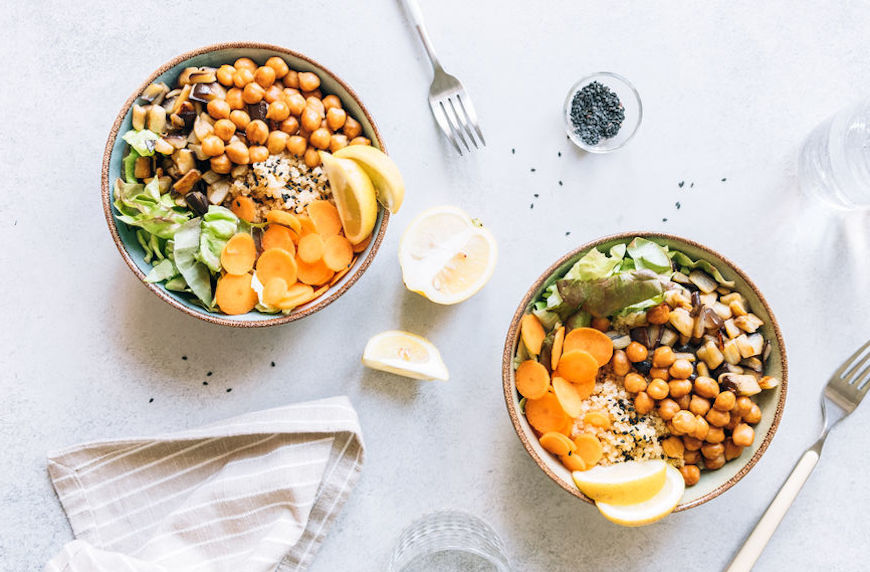
Plant-based eating is trendy for good reason—here’s what it takes to go vegan
August 06, 2019 at 11:51AM by CWC Ask someone five years ago about whether they’d consider going vegan, and you likely would have been answered with an eye-roll or a grimace. Now, people are gladly adding oat milk to their coffee and trying Beyond Meat when it hits their grocery store, and even traditional companies like Tyson are trying to meet the growing (non-meat) demand with their own innovations. It’s a major reason why we’re convinced there’s never been a better time to go plant-based, if that’s your thing. However, veganism can be a tough sell, which perhaps explains why a 2018 Gallup poll found that only 3 percent of Americans consider themselves fully vegan (only a slight gain from 2 percent of Americans in 2012). People on a vegan diet avoid all foods containing animal products, from meat and poultry to dairy, eggs, and gelatin. Complicating matters is the fact that animal-derived ingredients can pop up in surprising places, says Vandana Sheth, RD, a vegetarian nutritionist and a spokesperson for the Academy of Nutrition and Dietetics (AND). Gelatin is in some yogurts, fruit cups, and candies, for example, while lard shows up in some tortillas and beans—meaning a vegan often has to do careful reading of ingredient lists on packaged foods and at restaurants to ensure they’re not consuming any animal products accidentally. Instead, they load up on plant foods like fresh fruits and vegetables, whole grains, legumes, nuts, and seeds. ad_intervals[‘413349_div-gpt-ad-8891272-3’] = setInterval(function () { if (ads_ready) {

A Yale career coach reveals the common mistake that could keep you from your dream job
August 06, 2019 at 11:24AM by CWC When you’re shopping the job market, Ariana Grande-level success (as in, “I see it, I like it, I want it, I got it”) is pretty much the dream. Furthering a career is a complicated formula though. As much as we all may want to live out the lyrics of one ponytailed pop star, landing a shiny new gig requires resumes, references, cover letters—and, oh, the all-important post-interview thank you note. According to career experts at Yale University’s Office of Career Strategy, the timing, content, and duration of your letter of gratitude can help you earn—or lose—points when interviewers look to score you against other candidates, CNBC reports. The email (or hand-written letter) should be between 250 to 350 words, sent within 24 to 48 hours after you leave the interview, and grammatically flawless. Formalities are necessary, too: thank them for their time, remind them how interested you are in the position, and dazzle them what past qualifications make you a strong candidate. ad_intervals[‘413375_div-gpt-ad-7435403-3’] = setInterval(function () { if (ads_ready) { clearTimeout(ad_intervals[‘413375_div-gpt-ad-7435403-3’]); googletag.cmd.push(function(){googletag.display(‘div-gpt-ad-7435403-3’);}); } }, 100); Beyond the nitty gritty details, the Yale experts explain that personalizing the content to reflect what you would add to the company, as well as what you hope to gain by scoring a desk will make you stand out. Susie Moore, life coach and author of career book What If It Does Work Out?, specifies that this looks like highlighting your takeaways from the interview: “I’d love the
This ‘around the world’ plank series works every muscle in your core in just 5 minutes
August 06, 2019 at 10:42AM by CWC Whenever it comes time to do a core workout on my own, I tend to crunch myself into oblivion for five minutes, then flip over and finish things off in a plank. Thrilling stuff, huh? Not only is this series super boring (true story: I’ve actually almost fallen asleep in the middle of doing it), it also completely ignores all of the other muscles in the midsection aside from your abs, like your back and obliques. But this morning, during a class at New York City’s 305 Fitness, trainer Samantha Barriento introduced me to an “around the world abs” sequence that left every square inch of my core positively quaking in the best (and least boring) possible way. Here’s how it works: You start off in a plank, then cycle through a series of moves on your sides and back in order to target all 360-degrees of your core. You’re essentially moving your body in a circle—or, “around the world”—to be sure you don’t miss a single muscle. “This sequence will get at the main muscle groups in your abdominal area and will help you feel supported,” says Barriento. Forearm plank: Start in a forearm plank, engaging your abs and glutes to lengthen the spine and making sure your head is in line with your bum. Hold for 30 seconds. Hip dips: Holding your plank, move your hips back and forth from side to side. This will activate the obliques and transverse abdominals.
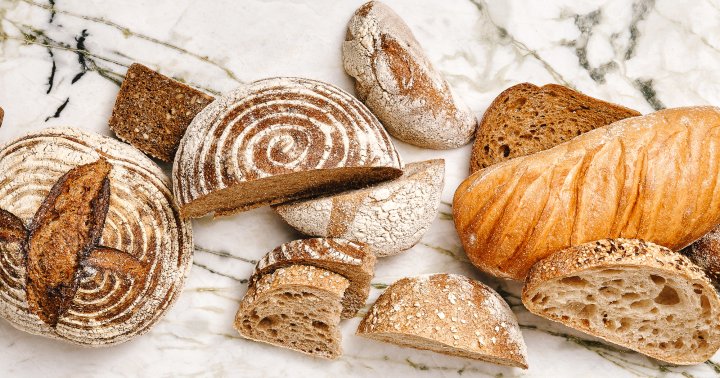
Is This Type Of Bread Actually Good For Your Blood Sugar?
August 06, 2019 at 10:42AM Everybody loves bread. (That’s a scientifically proven fact, isn’t it?) Unfortunately, we also know simple carbs and grains aren’t always the best for our health; our croissant, baguette, cinnamon toast, and brioche dreams are crushed regularly. But not today! A new study, published in the journal Microbiome, is all about the health benefits of rye bread, which seems to be good for our health in more ways than one. Getting to know the bacteria in rye bread. The study, which was performed by researchers from the University of Eastern Finland, analyzed the bacteria found in rye sourdough, which is what’s used to make rye bread. First, they found that it contains high levels of lactic acid bacteria. These beneficial microbes have the important job of fermenting the dough, creating the sourdough taste we all love, but they also affect the contents of the bread itself by interacting with it and producing other substances, called metabolites. The researchers dug deeper and compared the metabolites produced by the bacteria in rye bread to the ones produced naturally by human gut bacteria. The results showed that the lactic acid bacteria in rye help produce branched-chain amino acids and peptides that can affect human health in positive ways, including having a beneficial effect on insulin levels. We’ve long known that eating rye bread leads to a less drastic insulin response compared to other types of bread, but until now, we didn’t know why. It’s not just about lower blood