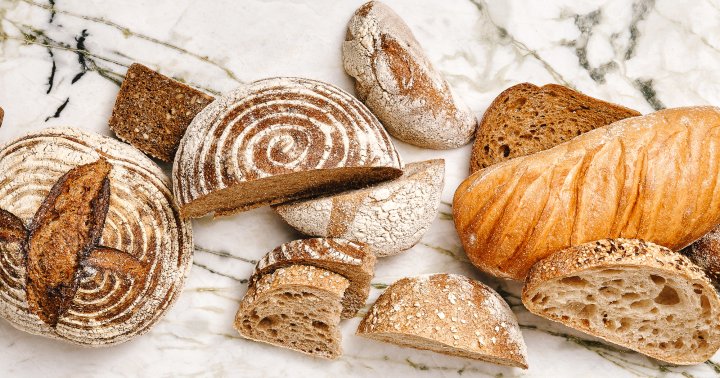
August 06, 2019 at 10:42AM Everybody loves bread. (That’s a scientifically proven fact, isn’t it?) Unfortunately, we also know simple carbs and grains aren’t always the best for our health; our croissant, baguette, cinnamon toast, and brioche dreams are crushed regularly. But not today! A new study, published in the journal Microbiome, is all about the health benefits of rye bread, which seems to be good for our health in more ways than one. Getting to know the bacteria in rye bread. The study, which was performed by researchers from the University of Eastern Finland, analyzed the bacteria found in rye sourdough, which is what’s used to make rye bread. First, they found that it contains high levels of lactic acid bacteria. These beneficial microbes have the important job of fermenting the dough, creating the sourdough taste we all love, but they also affect the contents of the bread itself by interacting with it and producing other substances, called metabolites. The researchers dug deeper and compared the metabolites produced by the bacteria in rye bread to the ones produced naturally by human gut bacteria. The results showed that the lactic acid bacteria in rye help produce branched-chain amino acids and peptides that can affect human health in positive ways, including having a beneficial effect on insulin levels. We’ve long known that eating rye bread leads to a less drastic insulin response compared to other types of bread, but until now, we didn’t know why. It’s not just about lower blood
Category: 2019 Wellbeing

How To Eat Plant Based When You Eat All The Things
August 02, 2019 Welcome to our first-ever segment of So What?, where we follow along as wellness and lifestyle blogger Minna Lee makes sense of some of the hottest sustainability topics today. Our planet is experiencing some big, real-time challenges, and we know it’s unrealistic to right this ship overnight. But easy, doable steps that steer us in the right direction every day do exist—simply choosing Earth-friendly foods like So Delicious Dairy Free beverages and desserts is one way to get on it. Up first, Minna gets a fresh perspective on plant-based eating, plus some practical tips on actually making it happen for those who love eating all the things. Advertisement Author | Life by Daily Burn Selected by CWC

Your No-Questions-Asked Guide To Getting Rid Of ALL Your Old Stuff Responsibly
August 06, 2019 at 02:02AM Share on: In her new book Less Stuff, zero-waste advocate Lindsay Miles provides the guide to responsible decluttering we’ve been waiting for. In it, Miles goes a step beyond the basics to give readers a sense of how a clean home can be a valuable part of any eco-friendly life. Here, she provides ideas of where to donate old goods beyond your local thrift shop (because those can get overwhelmed with stuff!). When we think about donating, we think of the charity shop. Actually, we tend to think of the nearest or most convenient charity shop—but different stores will take different items, so there’s no need to limit ourselves to one. Donations don’t need to be limited to charity shops, either. We can give items away to community groups, organizations, and neighbors—and they’ll often take things charity shops might not. You’ll be surprised what it’s possible to give a new home. Too many of us are guilty of ‘wishcycling’ when it comes to making charity-shop donations. A word on charity shop donations. The most obvious (and easiest) place to donate your unwanted items is the charity shop or thrift store. Remember, though—these stores want products that they can resell. That means items that are clean, complete, and in good working order. Too many of us are guilty of “wishcycling” when it comes to making charity shop donations. We think an item still has some life left, and we don’t want to throw it out because
3 Strategic Ways To Cycle On & Off Your Keto Diet For Optimal Results
August 06, 2019 at 01:33AM Keto doesn’t have to be a low-carb life sentence. Continue Reading… Author William Cole, D.C., IFMCP | Life by Daily Burn Selected by CWC
The Secret To Avoiding Burnout? Try A Little Mindful Indulgence
August 06, 2019 at 01:09AM In 2019, burnout was officially recognized by the World Health Organization. My colleagues and I thought, “It’s about time!” But it was an important step in affirming that you’re neither weak nor alone if you’ve burnt out or are teetering on the brink. But one lingering fallacy that still remains: Most of us believe burning out is acceptable and expect to experience it repeatedly. In short, there’s no other way out. Here’s the problem with this fallacy: Burning out is not a badge of honor: We all know about the machismo of little sleep, where people compete on the number of hours they’ve slogged through and compare how they’ve barely slept. It’s as though chronic, overwhelming stress is a status symbol—if you haven’t burnt out, you aren’t working hard enough. That’s no way to live. It can lead to learned helplessness: We find new ways of coping as we emerge from the ashes of burnout—but these may not be healthy. Then there is the awful recovery period, endured to the familiar soundtrack of depression, anxiety, and self-doubt. Repeat this on a loop, and imagine how you’ll dread the next round of burning out. Put simply, we learn to become helpless and hopeless. What if I—a psychologist for Type-A perfectionists—told you there’s another way out? Specifically, a way that my friend and two-time Olympian Peter Shmock and I christen “The Jedi Way to Performance.” Coming from two very different life paths and disciplines, Peter and I
5 Easy Healthy Dinners That Serve Just One Person
August 06, 2019 at 12:41AM Party of one—and make it delicious. Continue Reading… Author Liz Moody | Life by Daily Burn Selected by CWC
Back To School: How To Help Your Anxious Kid Get Excited For School
August 06, 2019 at 12:08AM An expert-approved plan to help relieve school-time stress. Continue Reading… Author Alexandra Engler | Life by Daily Burn Selected by CWC
A 3-Minute Practice For Moving Through Anxiety & Quieting The Mind
August 05, 2019 at 08:03PM Finally: a technique for quieting the mind that actually works. Continue Reading… Author Olessa Pindak | Life by Daily Burn Selected by CWC
These Are The Best Keto-Approved Sweeteners
August 05, 2019 at 01:02AM Yes, you can have your cake and keto too. Continue Reading… Author Liz Moody | Life by Daily Burn Selected by CWC
When One Retrograde Ends, Another Begins! Here’s Your Weekly Horoscope
August 05, 2019 at 12:26AM Days to watch: Wednesday, Thursday, and Sunday! Continue Reading… Author The AstroTwins | Life by Daily Burn Selected by CWC